Build with the people
who will use it.
A new workflow only helps if it makes sense in the real working day. We start there, then make the next step clear enough to try.
- 1
Find the friction.
Look at the work with the people who do it. Choose one problem and agree on what a useful first result would be.
- 2
Build it together.
Build the agreed solution and test it with your team against the result you chose.
- 3
Keep what works.
Train your team, document the method and name an owner so the work stays useful after handover.
First, agree on
what better means.
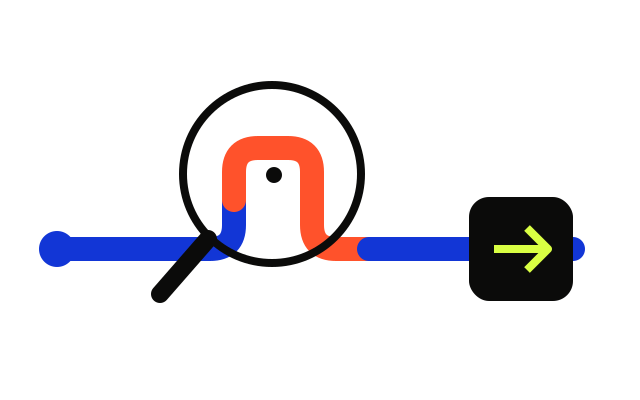
We look at a specific workflow, who depends on it and what currently gets in the way. Together, we decide what belongs in scope, what needs approval and how to recognize a useful result.
Access, data boundaries, responsibilities and acceptance criteria are agreed before implementation begins.
Try it in the
working day.
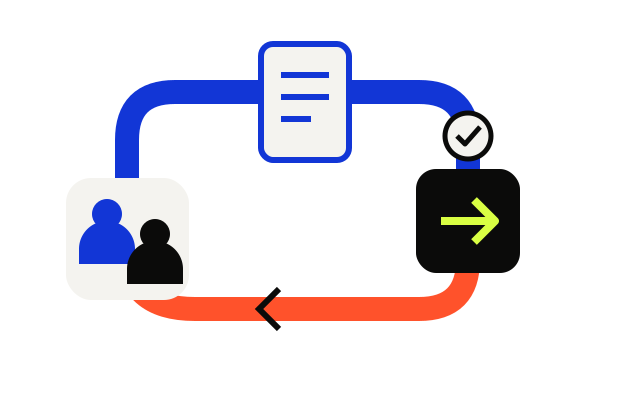
Build a bounded version. Test it with representative, approved information. Give the people using it a chance to spot what the diagram missed.
Keep a human check where judgment matters. Document the fallback before the new process becomes essential.
Leave more than
a finished task.
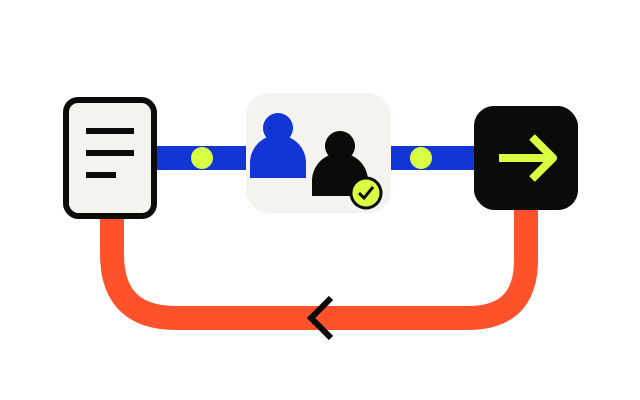
The team needs the working method, the reason behind it and the ability to maintain it. Handover includes usable documentation, a named owner and a review point.
Any ongoing support is scoped separately. The goal is a system your business understands.
Start with the thing
that keeps getting stuck.
You do not need an AI strategy before the conversation. Bring a real problem and a picture of what better would look like.
Start a conversation